
Blog
What Is the Best Way to Divide Kids’ Closets Between Siblings?
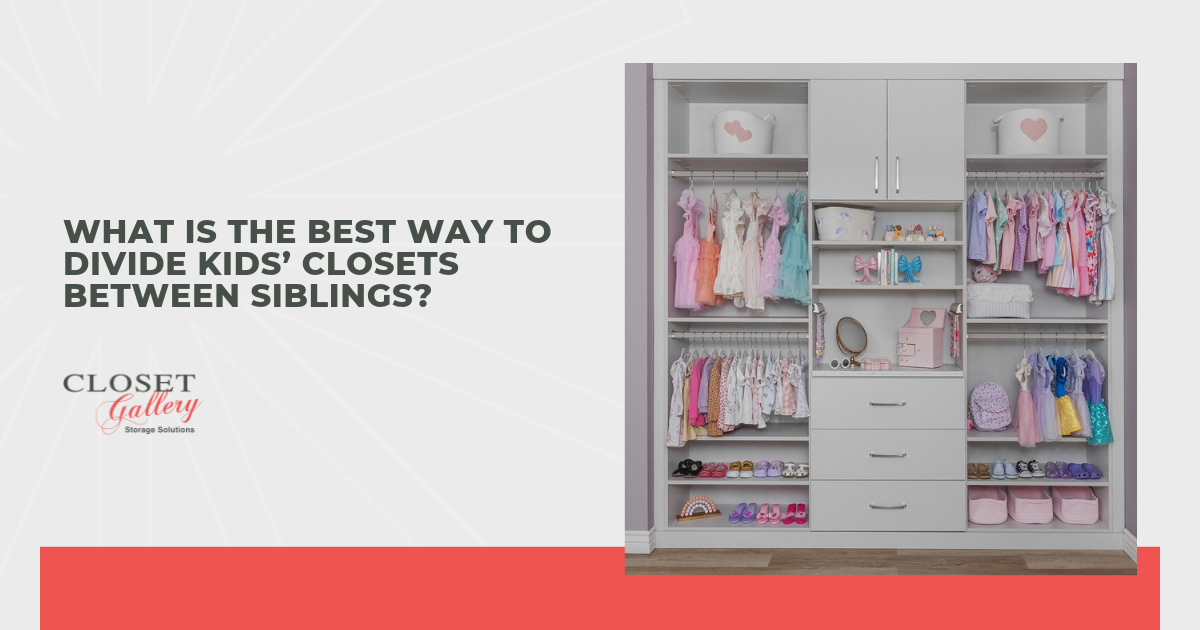
Siblings who share a bedroom can usually work out who gets the top bunk, but a single closet rod tends to spark a whole new round of negotiations. In most homes, trouble with kids' closets starts when nobody knows where their things belong, not when the space runs out. I like showing families how a few well-placed dividers and shelves can calm a shared closet without a full remodel.
Your best bet is giving each child a clearly defined zone that fits their height, wardrobe size, and daily routine. Fair doesn't have to mean a perfect 50/50 split. Your smartest move is giving each child a clearly defined zone sized to their height, wardrobe, and daily routine, then choosing adjustable rods and shelving that can shift as one sibling outgrows the other or picks up a new hobby.
After planning shared closets for families with toddlers, teens, and every age in between, I keep coming back to the same 7 methods. Here's how I split a kids' closet so it stays balanced and functional:
- Split the space with built-in dividers
- Color-code each child's side
- Assign zones based on age and reach
- Invest in custom shelving that grows with them
- Create a simple labeling system
- Maximize vertical space with double hanging rods
- Rotate clothes by season to free up room
Some of these fixes cost almost nothing, and a few might surprise you with how quickly they end the daily tug-of-war over shared kids' closets
Split the Space With Built-In Dividers
Shared closets fall apart fastest when there's no physical line between one child's things and the other's. Hangers creep, folded jeans migrate, and before long nobody remembers which shelf belonged to whom. Built-in dividers give each sibling a fixed boundary they can see and touch. I've found kids respect a solid panel far more than a strip of tape or a verbal agreement.
Several divider styles work well in a shared space, depending on your layout:
- Vertical Panels: Full-height panels running floor to ceiling turn one reach-in into two separate closets. They work best when both kids have similar wardrobes and you want the split to feel completely even.
- Center Drawer Tower: Stacked drawers in the middle split the hanging space while adding storage at the same time. Each child claims the drawers on their side, and the top surface holds folded sweaters neatly.
- Shelf Dividers: Short acrylic or wood dividers keep folded stacks from toppling into a sibling's section. They're inexpensive, easy to move, and a smart add-on even when you already have a larger panel in place.
One mistake I see often is placing the divider dead center without checking who needs more room. Older kids usually have longer clothes and bigger wardrobes, so shifting the panel a few inches can make the kids' closet feel fairer to both. Before you install anything, measure each child's hanging items and plan the split around real numbers. Fixed dividers are hard to move later, so getting the position right the first time saves you a rebuild.
Color-Code Each Child's Side
Colors give kids a shortcut that written labels can't always match, especially before they're confident readers. Once one child owns blue and the other owns green, sorting laundry and finding a favorite shirt becomes almost automatic. I like how color turns a shared kids' closet into something even a three-year-old can manage alone. Kids also feel proud of "their" shade, so they're more likely to keep their side in order.
Color works best when it shows up in several places at once:
- Hangers: Colored hangers make it obvious when a shirt ends up on the wrong rod. Pick bold, contrasting shades rather than two similar pastels, so kids can spot the difference in dim morning light.
- Bins and Baskets: Fabric bins in each child's color keep socks, pajamas, and accessories sorted on lower shelves. Kids can toss items in without folding, and parents can tell at a glance whose basket is overflowing.
- Drawer Hardware: Painted knobs or colored drawer pulls mark ownership without adding clutter to the space. They're cheap to replace later, so you can update the colors when kids decide green feels too babyish.
I usually steer parents away from choosing colors to match the bedroom decor. Kids buy in faster when they pick their own shade, and they'll treat the system as theirs instead of another house rule. Stick to one signature color per child and keep it consistent across hangers, bins, and hardware. Extra accent colors might look fun, but they blur the very line you're trying to draw.
Assign Zones Based on Age and Reach
Kids who share a closet rarely share the same height, and their storage should reflect it. Five-year-olds can't reach a rod set for a twelve-year-old, so anything placed up high gets ignored or pulled onto the floor. Divide by reach instead of left and right, and each child gets the levels they can actually use. I always tell parents that kids stay organized only when they can grab and return their things without asking for help.
Use these height guidelines as a starting point when you map out each child's zone:
- Toddlers and Preschoolers: Keep their rod about 30 to 36 inches off the floor, with open bins below for socks and pajamas. Low placement lets little ones choose an outfit and hang a jacket without climbing.
- School-Age Kids: Set their main rod around 42 to 48 inches high, which suits most kids between six and ten. Add a shelf just above it for hats, backpacks, and sports gear they use weekly.
- Tweens and Teens: Give older kids the upper rod at 60 inches or higher, along with the top shelf. They can reach high spots, and storing seasonal or rarely worn items up there keeps the middle clear.
One of the most common mistakes I see is handing the prime middle zone to whoever complains loudest. Mid-height space is the easiest for both kids to use, so split it based on daily needs, not seniority. Your youngest may need more low drawers now, while your oldest could claim a bigger share once longer clothes start piling up. Revisit the layout each summer so the kids' closet keeps pace with their height.
Invest in Custom Shelving That Grows With Them
Children outgrow their storage needs faster than most furniture can handle. Toddlers need low cubbies for shoes and pajamas, while a ten-year-old suddenly wants room for sports gear and a growing sneaker collection. Fixed shelves lock you into one stage, so they start feeling wrong within a year or two. Adjustable systems let you move each shelf up or down in minutes as needs shift.
Look for these features when you're comparing shelving options:
- Track-Mounted Shelves: Wall rails with slotted standards let you reposition shelves without tools or new holes. Kids can even help shift their own shelves, which gives them a little more ownership of the space.
- Removable Cubbies and Drawers: Modular inserts slide in for toddler shoes and stuffed animals, then come out once teens need more hanging room. You'll reuse the same pieces elsewhere in the house instead of tossing them.
- Durable, wipeable finishes: Melamine and laminate surfaces handle sticky fingers, muddy cleats, and dragged backpacks far better than raw wood. Your shelves will still look clean years later when the youngest finally inherits them.
I always tell parents to spend a little more on the frame and save on the accessories. Baskets and hooks are easy to swap later, but a solid system is the piece you'll keep for a decade. Pick a kids' closet design with room to expand, and you won't be starting over when your preschooler becomes a preteen.
Create A Simple Labeling System
Labels settle arguments in a shared kids' closet before they even start. When a bin says "Maya's socks" in big letters, there's no debate over whose pile is whose. Clear markers also help younger kids put laundry away without asking you for directions.
I like using picture labels for kids who can't read yet. Simple photos of a T-shirt or pants work far better than words they don't recognize. Once they start reading, swap in printed tags and let them choose the font or color. Kids take more pride in a space they helped set up.
Keep the system easy enough to last. Chalkboard labels, clip-on tags, and removable vinyl let you update categories as wardrobes change without scraping off old stickers. Stick to one label style across both sides so the closet looks unified, then use each child's color to show ownership. Complicated systems rarely survive past the first month, so resist the urge to label every single item.
Maximize Vertical Space With Double Hanging Rods
Most reach-in closets come with a single rod at adult height, which leaves a lot of empty wall below for small kids. Kids' clothes are short, so adding a second rod underneath instantly doubles your hanging space. Shirts and jackets go up top, while pants and skirts hang below.
In a shared kids' closet, I like giving the younger sibling the lower rod and the older one the upper rod. Each child gets a full-width section at their own eye level, and nobody needs a step stool to grab a hoodie. You can also split the closet side to side instead, with double rods on one half and a single long rod on the other for dresses or longer coats.
Mount the lower rod about 42 inches from the floor and the upper rod around 84 inches. Adjust both based on your kids' heights and the length of their longest everyday pieces. Once the younger child grows tall enough, pull the lower rod out and use that space for drawers or shoe cubbies.
Rotate Clothes by Season to Free Up Room
Two kids' worth of winter coats, swimsuits, and rain boots won't fit comfortably in one closet at the same time. Off-season pieces belong somewhere else, which leaves prime shelf and rod space for what each child actually wears right now. Your kids will spend less time digging and more time getting dressed.
Stash off-season clothes in one of these spots:
- Under-Bed Bins: Low, rolling containers slide beneath beds and keep out-of-season clothes within easy reach. Give each child their own labeled bin so swapping wardrobes later doesn't turn into a sorting project.
- Top Closet Shelves: High shelves sit out of kids' reach, which makes them perfect for bulky sweaters or summer gear you won't need for months. Clear bins let you see contents without pulling everything down.
- Vacuum Storage Bags: Compression bags shrink puffy jackets and snow pants to a fraction of their size. Tuck them into a hall closet or basement shelf, and you'll reclaim a surprising amount of space.
I've found rotation works best when it's tied to a routine your family already has, like the first week of school or spring break. Pull everything out, let each child try on anything questionable, and donate what no longer fits. Siblings close in age can pass down outgrown pieces right then, so nothing sits forgotten in a bin. Keep the swap quick, and the kids' closet stays lighter all year.
Conclusion
Shared space doesn’t have to mean constant compromise or arguments over whose belongings belong where. Your children can have different habits and still use the same kids’ closet comfortably. Success isn’t a perfectly arranged shelf at the end of each day, but a setup both siblings understand and feel comfortable using. Give yourselves room to adjust without treating an untidy afternoon as proof something isn’t working. Children need time to learn new routines, especially together. With realistic expectations, sharing a closet becomes a manageable part of family life instead of another daily point of tension.








Closet Gallery
2222 Francisco Drive Suite 220-110
El Dorado Hills, CA 95762
Call Us