
Blog
8 Ways to Maximize Storage in a Small Reach-In Closet
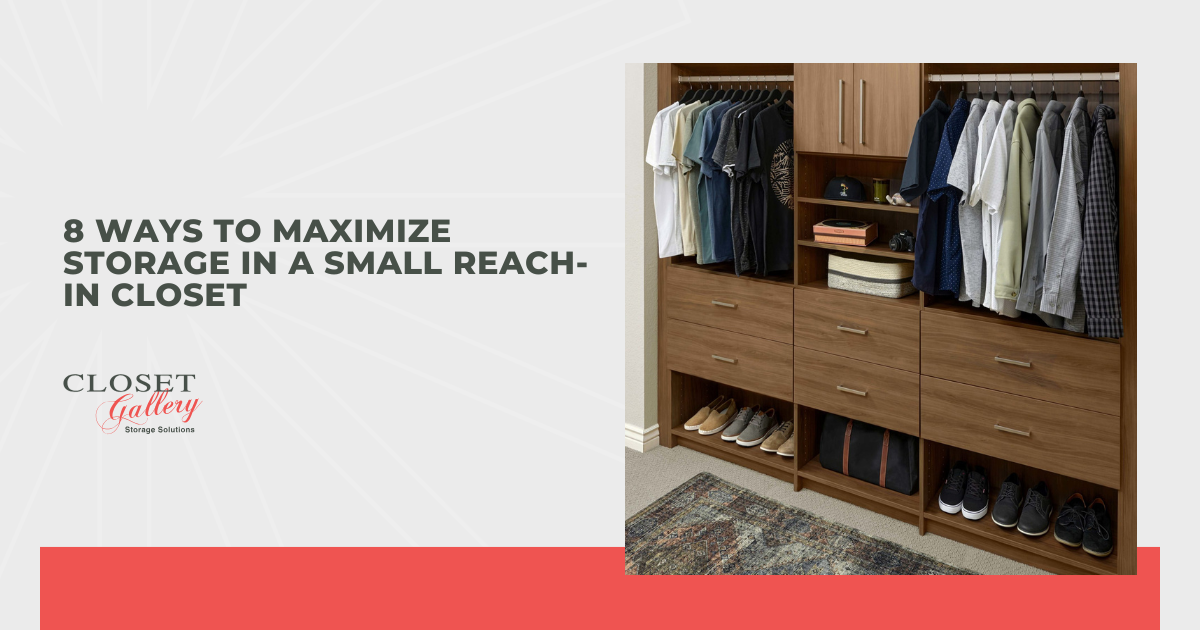
Small reach-in closets can be surprisingly hard to keep organized. With limited space, it doesn’t take much for shoes, folded clothes, accessories, and seasonal items to pile up. I often remind everyone that the problem usually isn’t the size of the closet, but how the space is being used.
The good news? You don’t always need a bigger closet, but rather a smarter closet. With the right storage solutions, even a compact reach-in can feel more spacious, functional, and easy to maintain. Whether you’re organizing a bedroom closet or a hallway closet, having the right storage plan can help you make the most of every inch.
If you want to get more storage out of your reach closet without it making it feel packed, these eight ideas can help you put overlooked space to better use:
- Declutter what you don’t use
- Use double-hang rods
- Add adjustable shelving
- Install shoe storage/racks
- Incorporate drawers
- Use door-mounted or wall-mounted accessories
- Go up with overhead storage
- Utilize bins and baskets strategically
Read on, and I’ll help you see how the right approach can make your reach-in closet feel far more functional without adding more square footage.
Declutter What You Don't Use
Redesign work on a reach-in closet should always start with clearing everything out first. Clothes you haven't worn in years take up space that could hold pieces you reach for every day. I always tell clients to pull everything out first, because it's impossible to plan storage around clutter you can't even see clearly. It feels tedious to sort through old items, but doing so saves you from paying for organizers you don't actually need.
- One-Year Rule: Anything you haven't touched in the past twelve months probably doesn't deserve prime space in your reach-in closet. Set it aside and decide later whether it's worth keeping in storage elsewhere.
- Guilt Pile: Some items stick around simply because they cost money or came from someone you love. Once you let them go, you free up real room for what you actually use.
- Duplicate Check: Reach-in closets fill up fast when five similar sweaters or three winter coats compete for the same six inches of rod space. Keep the one you love most and pass along the rest.
Smaller, well-edited wardrobes always outperform stuffed ones, no matter how many bins or shelves you add later. Reach-in closets punish overcrowding more than walk-ins because they don't have the extra square footage to absorb clutter. Once you've thinned things out, every other upgrade on this list works twice as well. There’s nothing you can do to fix a closet that is still struggling to hold too much.
Use Double-Hang Rods
Vertical space above and below your existing rod often goes to waste in a reach-in closet, especially since most rods sit at a height meant for long dresses and coats. Shirts, folded pants, and skirts don't need nearly that much clearance to hang properly. A second rod installed above or below the first turns that wasted height into two functional zones instead of one. Double-hang rods rank among the simplest upgrades for adding capacity without extra floor space.
Most closets end up with one rod holding everything from long coats to short blouses, which wastes room every single day. You split hanging space by garment length instead, so you're not stretching six inches of clearance to fit items that only need three. Reach-in closets benefit even more from this than large closets, since every inch matters more when the footprint is small. I always explain that rod space solves a problem shelves simply can't touch.
Double rods work best when you group by category first, long items on one side and shorter pieces stacked above or below on the other. Skirts and folded pants can share a second rod without ever feeling crowded. Reach-in closets with this setup end up holding nearly twice the wardrobe in the same physical space. Once you see it in person, it's hard to imagine going back to a single rod.
Add Adjustable Shelving
Fixed shelves look neat on installation day, but they rarely match how you actually live six months later. Seasons change, wardrobes shift, and storage needs shift right along with them. Adjustable shelving lets you raise or lower each shelf to match whatever you're storing at the time. I like how much flexibility this gives a reach-in closet that has to work year round instead of just on moving day.
Stacks of folded sweaters might only need ten inches of clearance, while bins or shoeboxes below need almost double that. Fixed shelving forces you to accept wasted air space above shorter items, since the shelf above can't move to meet them. Reach-in closets with adjustable shelving let you close that gap and reclaim inches you didn't know you had. Each shelf earns its spot instead of sitting there half empty.
Adjustable systems also grow with you, so a closet that fits a wardrobe today can adapt just as easily in five years. Kids' closets are a great example, since shelf heights need to change constantly as kids grow. Reach-in closets built with adjustable shelving avoid becoming outdated the moment your storage needs shift. You're definitely not locked into one layout with this upgrade.
Install Shoe Storage/Racks
Shoes multiply fast, and reach-in closets rarely come with a plan for where they should live. Left alone, pairs end up scattered across the floor, which eats into space you need for bins or a hamper. Angled shelves, cubbies, or slim vertical racks give every pair a fixed spot instead of a random one. Shoe storage solves one of the messiest problems in any small closet.
- Angled Shoe Shelves: Angled shelves tilt each pair forward so you can see them at a glance without digging through a pile. They also fit more pairs per foot than flat shelving does.
- Slim Vertical Racks: Narrow closets benefit most from vertical racks, since they store shoes in a tight footprint without blocking hanging space. Reach-in closets with limited width almost always need this kind of setup.
- Over-The-Door Racks: Door-mounted shoe racks work well when floor and wall space run out completely. They hold a surprising number of shoe pairs without touching your existing shelving or rod space at all.
Shoe storage changes how the whole closet feels, not just how it looks. Reach-in closets with dedicated shoe storage free up ground space for bins, hampers, or even a small step stool. I notice clients feel this shift almost immediately, since floor clutter is usually the first thing people see when they open the door. One simple change like this makes every later upgrade easier to fit.
Incorporate Drawers
Hangers work great for shirts and dresses, but plenty of items don't belong on a rod at all. Folded basics like t-shirts, workout gear, socks, and underwear need a dedicated, dust-free home instead. Built-in drawers give a reach-in closet that home without forcing you to keep a separate dresser somewhere else in the room. I think drawers are one of the most underrated additions, since they solve a problem hanging space simply can't.
Drawers keep small items contained instead of stacked loosely on open shelves where they tend to slide and topple. Socks and undergarments especially benefit from a closed space, since open shelving leaves them exposed and messy looking. Reach-in closets with built-in drawers also cut down on trips to another room while getting dressed, since everything lives in one place. Mornings move faster once you're not hunting through two different rooms for basics.
Custom drawer inserts can go even further, with dividers for jewelry, ties, or folded accessories that would otherwise clutter a shelf. Reach-in closets built this way feel more like a dresser and a closet combined into one efficient space. Fewer pieces of furniture means fewer things fighting for room in a small bedroom. Drawers close that gap between hanging storage and folded storage completely.
Use Door-Mounted or Wall-Mounted Accessories
Closet doors and side walls sit unused in most reach-in closets, even though they offer real storage potential. Door-mounted racks and wall-mounted hooks turn dead space into functional storage without touching your existing shelving or rods. Scarves, belts, ties, and jewelry all need a home that doesn't take up drawer or shelf space. This upgrade costs so little for how much organization it adds.
- Door-Mounted Racks: Door racks hold scarves, belts, or ties in neat rows instead of tangled in a drawer. Reach-in closets gain real storage here without losing an inch of floor or shelf space.
- Wall-Mounted Hooks: Hooks along a side wall give bags, hats, or robes a spot that doesn't compete with hanging clothes. They work especially well in narrow closets where every single wall counts toward usable storage.
- Jewelry Organizers: Small hooks or a mounted panel keep necklaces and earrings untangled and easy to find each morning. Storage like this rarely fits anywhere else in a small bedroom or dresser drawer.
Wall space above hooks or racks can also hold a small mirror or a slim organizer for jewelry, depending on your layout.Reach-in closets with these accessories in place feel noticeably more finished, even before you touch the shelving or rods. I find these small additions rarely cost much but have a significant impact on daily routines. Nothing about them requires major construction or a big budget.
Go Up with Overhead Storage
Most closets have a foot or two of dead air above the top shelf that never gets used for anything. Empty space like that works well for items you don't need on a daily basis, like seasonal clothing, extra linens, or luggage. Overhead storage in a reach-in closet takes advantage of height that’s often overlooked. I always tell clients this is the easiest square footage to gain, since it requires no extra floor space at all.
Labels matter more here than anywhere else in the closet, since overhead bins sit out of easy reach. Frequently used items should stay lower, while true off-season pieces can live up top without causing daily frustration. Reach-in closets that skip this step often turn overhead storage into a dumping ground nobody wants to deal with. Clear organization up top keeps the whole system working the way it should.
Memory boxes, extra bedding, and travel bags are all good candidates for this zone, since you only need them a few times a year. Reach-in closets with overhead shelving free up lower shelves for things you actually reach for every week. Height that used to sit empty becomes genuinely useful once you put a shelf there. Overhead storage rounds out a closet system instead of leaving one section behind.
Utilize Bins and Baskets Strategically
Loose items like gloves, hats, or workout accessories tend to roam free on shelves until they end up in a pile. Bins and baskets corral those smaller pieces into neat, contained groups instead of letting them scatter. Reach-in closets stay noticeably tidier once every category has its own container. Bins keep small items visible and easy to track down, instead of buried at the back of a shelf.
- Clear Bins For Visibility: Clear containers let you see contents at a glance, which saves time when you're searching for a specific item without opening every box. They work best for things you reach for often.
- Opaque Baskets For Overflow: Baskets that hide their contents work well for off-season items or things you'd rather not see stacked openly. Reach-in closets look calmer overall once visual clutter drops out of sight.
- Uniform Sizing: Matching bin sizes create a clean, cohesive look across shelves instead of a mismatched jumble of containers. Small details like this make a noticeable difference in how organized the space feels.
Clear labels save time too, since you won't need to open five containers just to find one scarf or pair of gloves. Reach-in closets built around this system stay organized long after the initial setup, since everything has an obvious place to return to. I tell clients that consistency matters more than fancy containers ever will. Simple systems beat expensive ones that nobody actually maintains.
Conclusion
A reach-in closet holds more potential than you probably give it credit for, and small changes really do add up to something bigger. Every upgrade on this list works together, so you don't need to tackle all eight at once to notice a difference. Start with one or two changes and let the rest follow as your budget and time allow. I've watched plenty of cramped closets turn into spaces their owners actually enjoy opening each morning, and that shift is always worth the effort. Your closet doesn't need more square footage. It just needs a better plan.








Closet Gallery
2222 Francisco Drive Suite 220-110
El Dorado Hills, CA 95762
Call Us